Do I Have to Shave My Head for a Hair Transplant? Shaven vs Non-Shaven DHI Explained
Do you have to shave your head for a hair transplant? Not necessarily. This guide compares shaven and non-shaven DHI — graft numbers, the real twelve-month timeline, the non-surgical alternatives, and how to decide — with the published evidence set out in full.
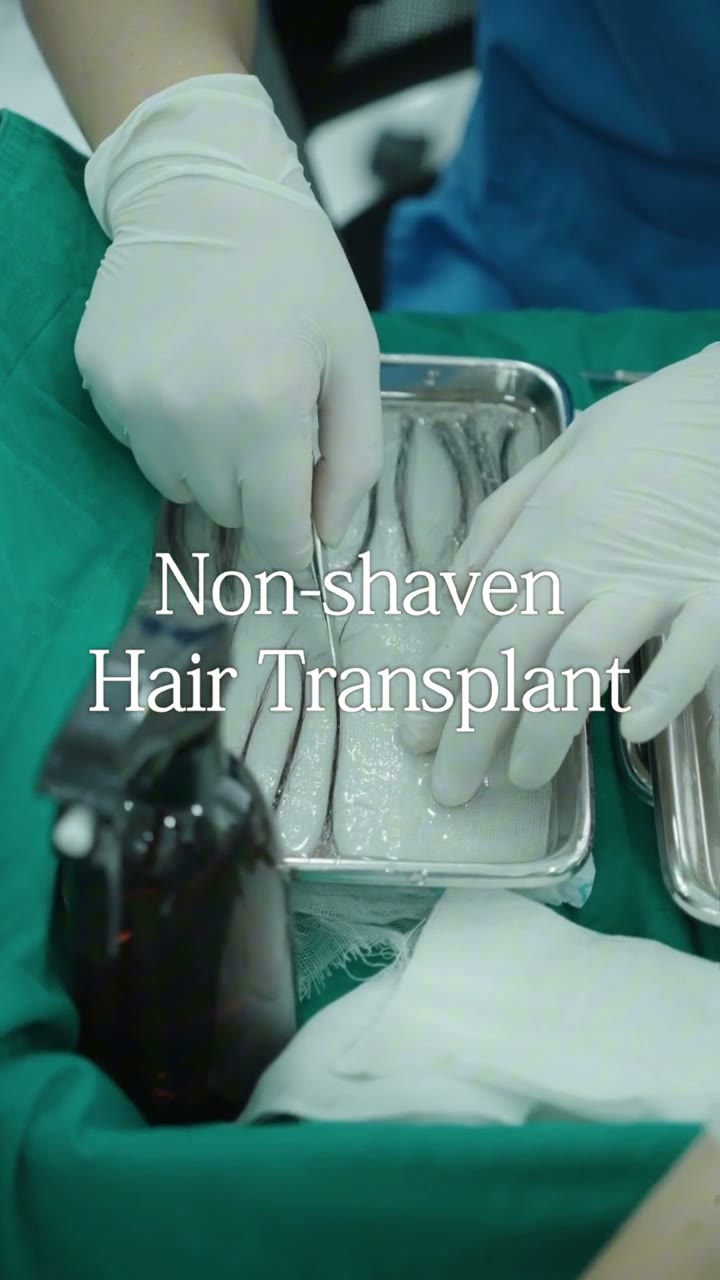
For a lot of men, whether the donor area has to be clipped short decides whether a hair transplant happens at all. It is also one of the few parts of the procedure where there is a real choice to make, and the choice has consequences: how many grafts can be moved, how long the operation takes, and how much of it anyone else can see.
MENHANCE performs DHI hair transplants both ways, shaven and non-shaven. The two differ in graft yield, operating time and how visible the work is afterwards, and the published evidence on each is set out below alongside the first twelve months of recovery. Surgery is not always the right starting point: a fair number of men who come in asking about a transplant are better served by medication first, so the non-surgical treatments are covered too.
Summary
- Shaving is not compulsory. Non-shaven DHI takes grafts from between the hairs you already have, so your own hair covers both the donor and the recipient area.
- Shaving gets you more grafts in one session: around 3,000, against around 2,400–2,500 non-shaven.
- The transplanted hairs shed in the first few weeks and regrow over the months that follow. The follicles stay in the scalp.
- Medication is for the native hair you still have, which a transplant does nothing to protect. Guidelines put it at the centre of treatment.
- The trip takes two to three days in Bangkok.
Start With the Diagnosis, Not the Technique
Most hair loss in men is androgenetic alopecia, better known as male pattern hair loss. But the pattern on your scalp does not prove the cause on its own. Thyroid problems, low iron, a recent illness, rapid weight loss and a number of medications all thin hair, and they can do it at the same time as a genetic pattern rather than instead of one.
Transplanting into a shedding problem that nobody has diagnosed spends donor hair you cannot get back. So every hair plan at MENHANCE starts with a work-up covering hormones, genetics, scalp and nutrition, along with a scalp evaluation recording the pattern of loss, how much density is left and how much donor hair is available. If you are travelling from overseas, the scalp analysis can be done online beforehand.
Guidelines also do not treat surgery as the first step. The European S3 guideline on androgenetic alopecia [2] and a 2024 consensus from the Spanish Trichology Group [3] both put medication at the centre of treatment in men, with surgery considered once the loss has settled and the donor area can support it. The Spanish group adds that surgeons generally hold off with younger men, and with men who have never been treated and whose loss is still moving. It also recommends screening for body dysmorphic disorder and talking through expectations before anyone commits. [3]
A transplant remains the right answer for a great many men. What the guidelines govern is the order, because a transplant moves hair you already have and the supply is fixed.
What DHI Is, and Where the Hair Comes From
Hair at the back and sides of the head behaves differently from hair on top. The band across the back of the scalp, called the mid-occipital region, resists the hormones that drive pattern loss, which is why it is still there while the crown thins. Follicles keep the characteristics of wherever they came from, including hair thickness, so moving them means they take that resistance with them. [1]
Surgeons call this band the safe donor area, and there is a limited amount of it. Usable density runs at roughly 65 to 85 follicular units per square centimetre. Above 80 is considered excellent; below 40 makes someone a weaker candidate. [1] A follicular unit is a natural bundle of one to four hairs with its own oil gland and a small muscle, so what gets moved is a bundle rather than a single hair.
DHI stands for Direct Hair Implantation. Follicles are taken out one at a time, loaded into an implantation pen and placed straight into the thinning area. The pen controls the depth, angle and direction of each graft, which is what decides whether the hairline looks like it grew there. No strip of scalp is removed and there are no stitches. The donor area heals as small puncture sites.
DHI, FUE and strip surgery: what the names mean
The three names describe different stages of the same operation, and commercial material tends to blur them.
- Strip surgery, also called FUT. A band of scalp is cut out from the back of the head, divided into grafts under a microscope, and the wound closed with stitches. This leaves a linear scar.
- FUE, or follicular unit excision. Follicles are taken out one by one with a small punch. The donor area heals as a scatter of small dots instead of a line.
- DHI. The harvesting is the same as FUE. The difference is at the implanting stage: with standard FUE the sites are made first and the grafts placed into them afterwards, while with DHI the pen makes the site and delivers the graft in one movement, so each graft spends less time out of the scalp.
That shorter time out of the scalp is the argument for DHI. No randomised trial has compared pen placement against conventional placement for graft survival in men with pattern hair loss. Clinics on both sides quote survival percentages. The published basis for ranking one above the other is weaker than the marketing suggests, and how carefully the team handles the grafts is a more likely driver of the result than which instrument puts them in.
Shaven and Non-Shaven Compared
The implanting method is the same in both cases. The only variable is whether the donor area gets clipped first.
| Non-shaven (long-hair) DHI | Shaven DHI | |
|---|---|---|
| Donor area | Left unclipped; grafts taken from between existing hairs | Clipped short |
| Grafts per session | Around 2,400–2,500 | Around 3,000 |
| Visible afterwards | Very little to see from day one | Small scabs for about a week |
| Best for | A receding hairline, a defined patch of loss, or adding density | More advanced loss, a bare crown, or maximum coverage in one visit |
Non-shaven, or long-hair DHI
Nothing is clipped. Grafts are taken from between your existing hairs and placed into the thinning area, and your own hair falls back over both sites. There is very little to see from the first day.
The trade-off is how many grafts can be moved. Harvesting around hair that has been left in place is slower work: a 2023 multi-centre study of 152 no-shave cases across five countries recorded a rate of around 440 grafts an hour. [4] Patient satisfaction in that series was high, with 57.4% of the 129 patients reviewed at six months or later reporting they were very satisfied and the remainder satisfied. [4] A non-shaven session at MENHANCE covers around 2,400 to 2,500 grafts.
Suits: a receding hairline, a defined patch of loss, or adding density to an area where hair is thinning rather than gone.
Shaven DHI
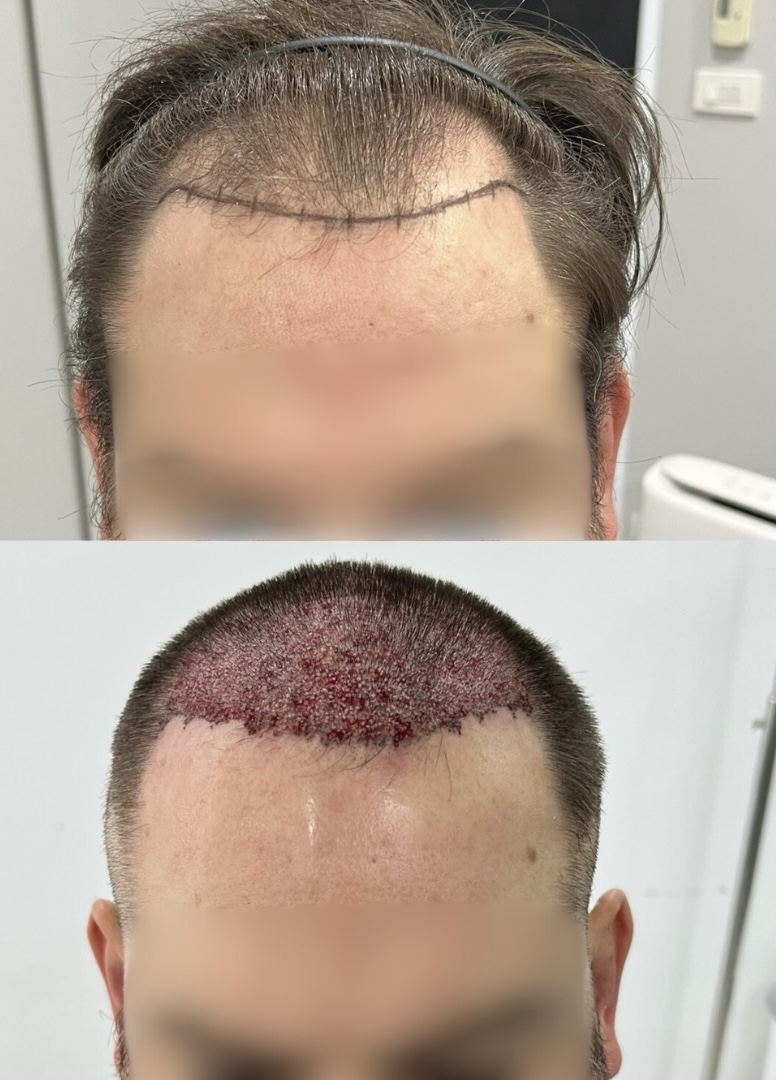
The donor area is clipped short. With a clear view the team can harvest faster and safely take more follicles in one sitting, around 3,000 grafts, so a larger area can be covered in a single trip. Small scabs show for about a week.
Suits: more advanced loss, a bare crown, or anyone who wants the most coverage from one visit and does not mind short hair for a few weeks.
Why non-shaven yields fewer grafts
Leaving the donor hair in place costs operating time. At the slower harvesting rate recorded above, working around existing hair adds several hours to the session, and the number of grafts that can be taken safely in one sitting falls accordingly.
How the decision gets made
Mostly it comes down to anatomy: the area that needs covering, how dense the donor region is, and how long your hair is now. A man who needs 3,000 grafts across a bare crown is not a candidate for non-shaven, because that is more than the technique delivers in one session. A man rebuilding a hairline usually is.
Where both are possible, the choice is yours, and it turns on whether a short haircut bothers you more than the smaller graft count. The doctor confirms what is feasible at examination.
What Happens in the First Year
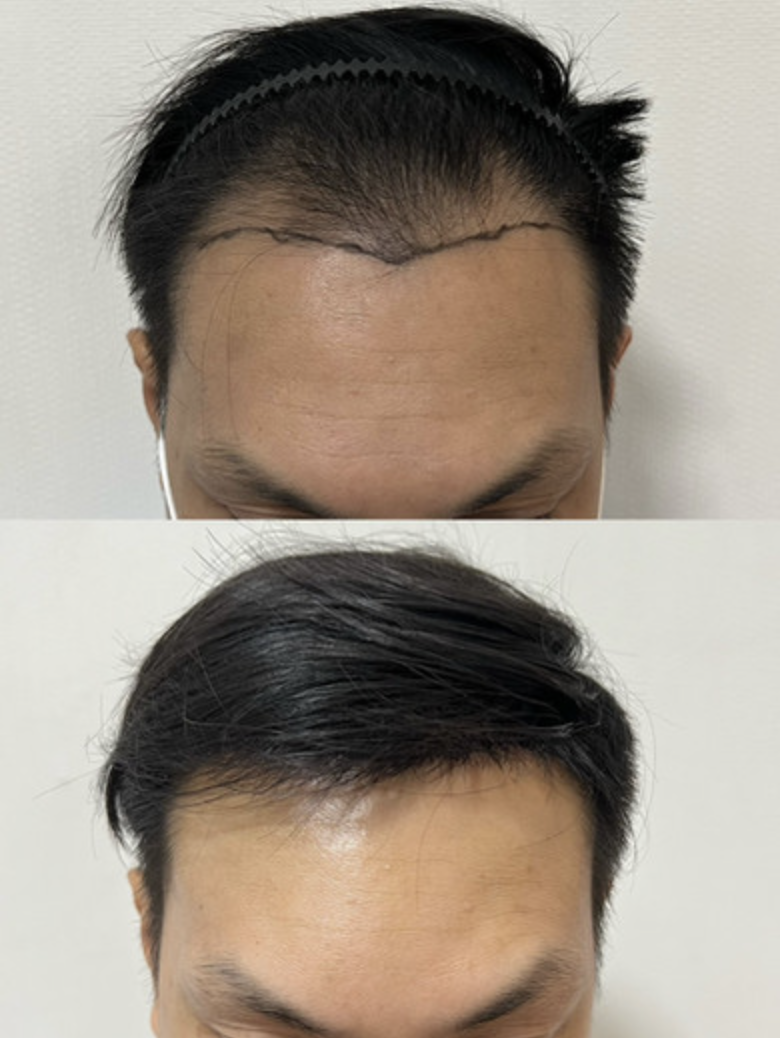
The transplanted hairs fall out within the first few weeks of surgery. In the no-shave study the long implanted hairs shed between two and eight weeks afterwards, [4] and clinical references describe the same course: implanted hairs shed early and can take several months to regrow. [1]
The hair that falls out is not the thing that was transplanted. What was moved is the follicle, the root; the hair it happened to be carrying at the time is incidental. Being moved pushes the follicle into its resting phase, called telogen. It lets go of the old hair, rests, then grows a new one from the same place. In an undisturbed scalp the resting phase lasts two to three months, and the growing phase that follows, called anagen, can run for two to six years. [1] Those two numbers are why the wait is as long as it is. Density drops before it climbs; the months in between are expected, not a sign that something has gone wrong.
Your own hair can shed as well
Native hair around the grafts sometimes sheds too, at the donor site, the recipient site or both. This is called shock loss. It is usually temporary, with new hairs appearing at three to six months. The risk is higher if more than 15% of the hair in the treated area is already miniaturised, meaning thinning and weakening rather than simply absent, and in that case the loss is occasionally permanent. [1]
This is a conversation to have with your doctor before surgery, particularly if the area being treated is thinning rather than bald. It is also an argument for starting medication well ahead of a transplant rather than on the day.
Month by month
- Days 1–7. Redness, mild swelling and small scabs. Use a wide-tooth comb on the grafted area and keep styling to a minimum.
- Weeks 2–8. The scabs clear and the transplanted hairs shed.
- Months 1–3. Little to see on the surface. Underneath, the follicles are coming out of their resting phase.
- Months 3–6. New hairs appear, fine and often lighter in colour at first. Native hair lost to shock loss usually returns in this window.
- Months 6–9. Density you can see.
- Months 9–12. The finished result. The new hair thickens, coarsens and blends in with the rest.
Redness, swelling and scabbing settle within 7 to 10 days. The rest of the wait is the hair cycle doing its work, and the follow-up schedule is spaced around it.
Follow-Up, and Why Medication Matters
| When | What happens |
|---|---|
| Day 1–5, in clinic | Wound check, professional hair wash and wound care, red light (low-level laser) therapy. For most patients this falls on Day 2 of the trip. |
| 2 weeks | Graft check, timed to coincide with the start of shedding |
| 3 months | Growth progress review |
| 6–12 months | Final result review |
For patients who have travelled in, the 2-week, 3-month and 6–12-month reviews are arranged remotely once you are home, with photos and a video call.
You go home with three months of finasteride and minoxidil. These are not for the transplanted hair, which is resistant to pattern loss already and needs no protecting. They are for the native hair you still have. If that keeps receding behind a transplanted hairline, you end up with a gap that takes a second procedure to fix.
The guidelines are consistent on this point. The European S3 guideline [2] and the 2024 Spanish consensus [3] both treat medication as the foundation of managing pattern hair loss rather than an optional extra alongside surgery. The Spanish consensus names 5-alpha-reductase inhibitors, finasteride among them, as first-line treatment in men, and discusses oral minoxidil alongside the topical form. [3] For transplant patients specifically, the clinical advice is to continue finasteride around the time of surgery and afterwards to protect the result. [1] Go through the possible side effects, and how you would recognise them, with your doctor before starting.
Minoxidil runs on its own schedule. It is usually stopped about a week before surgery and restarted five to seven days afterwards, on both the recipient and donor areas. [1] Follow your doctor’s timing rather than a general rule, because it depends on how your scalp is healing.
If a Transplant Is Too Early: Treating the Hair You Have
A transplant moves hair around. It does not create more. Where the scalp still carries thinning hair rather than bare skin, that hair can be treated directly, either instead of surgery for now or alongside it later. The evidence behind these treatments ranges from guideline-backed to barely tested.
| Evidence | Treatment | What it rests on |
|---|---|---|
| Guideline-backed | Oral and topical medication | Recommended for men in the European S3 guideline and the 2024 Spanish consensus [2] [3] |
| Randomised, placebo-controlled | Regenera Activa (autologous micrografts) | Randomised, evaluator-blinded, half-head trial against saline; each patient their own control. Small sample, 58-week follow-up [7] [8] |
| Randomised, with caveats | Red light therapy; platelet-rich plasma | Meta-analyses of randomised trials. Positive overall, but low certainty for PRP [5] [6] |
| Still being established | Hair Exocell (exosomes) | 11 clinical studies, 2 of them randomised; improvement reported in all, with larger trials still needed [9] |
None of these grows hair where no follicle is left. On bare scalp the choice is a transplant or nothing.
Oral and topical medication
A DHT blocker and a topical growth stimulant. It is the only one of these treatments that guidelines are built around: both the European and the Spanish recommendations for men centre on this class. [2] [3] It is also the least expensive option we offer, and the one most men should start with.
Growth Factor Hair Shot, or PRP
A small amount of your blood is drawn and spun to concentrate the platelets and the growth factors they carry. The result is injected into the scalp. A 2024 systematic review pooled 14 randomised trials covering 431 men and women with pattern hair loss, and found hair density rose by an average of about 27.5 hairs per square centimetre compared with controls. [5] A small gain in hair thickness was also reported but was not statistically reliable.
The trials varied in how PRP was prepared and how often it was given, and the authors graded their confidence in the size of the effect as low on that basis. [5] The direction of the finding across randomised trials is consistent; the exact gain in any one patient is not something the evidence can predict. This is our Growth Factor Hair Shot.
Regenera Activa
A small sample of your scalp is taken, processed into a suspension of cells and signalling material, and injected back into the thinning areas in the same session. It is the minimally invasive treatment we lean on most, and it carries the strongest trial evidence of any injectable we offer.
The key study is a placebo-controlled, randomised, evaluator-blinded, half-head trial in 27 patients with pattern hair loss, 17 men and 10 women. [7] Each patient acted as their own control: micrografts were injected into one side of the scalp and saline into the other, across three sessions 45 days apart, with the assessors blinded to which side was which. At 58 weeks the treated side had gained 23.3 hairs per square centimetre from baseline, while the placebo side had lost 0.7, a difference significant at p < 0.0001. [7]
That design counts for more than a larger uncontrolled series. A larger retrospective series of 140 patients reported density gains after a single session, pointing the same way. [8] Still, 27 patients is a small trial, much of the published work comes from one research group, and at 26 months six of those patients had renewed loss and were re-treated. [7] Pattern hair loss is a continuing process, and no injectable stops it permanently. Regenera Activa is available on its own or at a reduced rate alongside a transplant.
Hair Exocell
Exosomes are tiny vesicles that carry signalling molecules between cells. They are injected into the scalp, with microneedling as an option. Exosome therapy is the newest of these treatments and the least well evidenced. A systematic review published in September 2025 found 11 clinical studies of exosomes for hair loss: two randomised trials, three retrospective studies, three single-arm studies, one case series and two case reports. [9] All of them reported improvement in at least one measure, with density gains ranging widely from about 9.5 to 35 hairs per square centimetre, and no serious side effects. Even so, the authors describe the evidence as limited and call for larger, standardised randomised trials before treatment protocols are set. [9] Exosome preparations are not interchangeable between products. This is our Hair Exocell treatment.
Red light therapy, or low-level laser
Included after a transplant and available on its own. A meta-analysis of seven double-blind randomised trials comparing home-use devices against sham devices found a clear benefit for low-level laser therapy, with no significant sign of publication bias. [6] Devices using laser diodes alone did better than combined laser-and-LED devices. [6] It is painless, non-invasive, and better evidenced than most things sold for hair loss at home.
Prices, Packages and What Is Included
Current prices for every hair treatment, and what each package includes, are on the service pages.
- Full treatment menu with current prices: the hair restoration page.
- Transplant packages and what each one includes: the hair transplant page. Shaven and non-shaven are priced separately, with the graft count listed against each.
- Your own graft count and final price are set at consultation, once the scalp has been assessed.
Who Does What
Hair treatment at MENHANCE is carried out by the doctors below. Thai medical licence numbers are given so they can be checked.
The hair transplant doctor
Hair transplants at MENHANCE are performed in the clinic’s own licensed operating room by a dermatologist and hair transplant doctor, Thai medical licence No. 43687.
- Qualifications. Graduated from Phramongkutklao College of Medicine in 2012, followed by internal medicine residency training at the Faculty of Medicine, Srinakharinwirot University, 2012–2014.
- Hair transplant training. NHT / NaturalHair, Turkey, 2018, with international certificate diploma accreditation; Korean College of Cosmetic Surgery (KCCS), South Korea, 2018; Association of Cell Therapy Thailand, 2016. Attended the ISHRS World Congress, Bangkok, 2019.
- Experience. Performing hair transplants since 2018 and working in aesthetic medicine since 2015, with more than 1,000 cases completed.
- Techniques. DHI and FUE, shaven and long-hair harvesting, including long-hair DHI for men and women. Also performs mesotherapy, PRP, stem cell injection and red light therapy.
Injectable scalp treatments
Growth Factor Hair Shots and Hair Exocell treatments are performed by:
- Dr. Teanchai Siricharoensang (Dr. Chai), Senior Urologist. MD, Siriraj Medical School; Siriraj Certified Board of Urology; member of the Thai Urological Association and the American Urological Association. Thirty years in practice, thirteen of them at Samitivej Hospital. Thai medical licence No. 14396.
- Dr. Pichamon Siricharoensang (Dr. Mild), Men’s Health, Aesthetics and Wellness. MSc Clinical Dermatology, King’s College London; member of the Thai Society of Cosmetic Dermatology and Surgery. Thai medical licence No. 70440.
- Dr. Prus Taveepoka (Dr. P), Aesthetics and Sexual Medicine. MD, Chulalongkorn University; Diploma in Clinical Sexology, Thammasat University. Thai medical licence No. 60021.
How the Trip Works
- Before you fly. An online consultation covering your medical history, pattern of loss and donor availability, with the surgical plan drawn up in advance. The scalp analysis can be done remotely at this stage.
- Day 1. In-person consultation, scalp evaluation and final hairline design with the doctor, then the procedure. It is done under local anaesthetic; a shaven case takes around six hours, and non-shaven takes longer, because working around existing hair is slower. You stay awake throughout.
- Day 2. Wound check, professional hair wash and wound care, red light therapy. The wound check is scheduled between Day 1 and Day 5 after the procedure, which for most patients means the day after.
- Day 2 or 3. Fly home. You need no time off work beyond the trip itself.
The package covers one night at the Marriott Sukhumvit 49, hairline design with the doctor, lunch, a three-month supply of medication, red light therapy, wound care, a professional hair wash and post-procedure medication. Inclusions and terms are confirmed at consultation. Transplants are performed in Bangkok.
Find Out Which Option You Can Have
Both questions — shaven or non-shaven, and whether a transplant makes sense yet at all — come down to the same thing: a proper look at your scalp. DHI hair transplants are performed at our Bangkok clinic, shaven or non-shaven, as all-inclusive packages with a deposit holding your date. Growth Factor Hair Shots, Hair Exocell and Regenera Activa are available instead of surgery or alongside it. Consultations are also available in Phuket and Pattaya.
Find out which option suits you
Book a free, confidential consultation — including an honest assessment of whether a transplant is the right move yet. Patients travelling in can start with an online consultation, so the plan is ready before arrival.
Book a Free ConsultationChatFrequently Asked Questions
Do I have to shave my head for a hair transplant?
Often not. MENHANCE offers non-shaven DHI, where grafts are taken from between your existing hairs and nothing is clipped, as well as shaven DHI, where the donor area is cut short so more grafts can be taken in one session. Which one you can have depends on how much area needs covering and how dense your donor hair is. The doctor decides this at consultation.
What is DHI?
DHI stands for Direct Hair Implantation. Follicles are taken one at a time from the back and sides of the scalp and placed into the thinning area with an implantation pen. The pen sets the depth, angle and direction of each graft. No strip of scalp is removed and no stitches are needed.
What is the difference between DHI and FUE?
Both take follicles out one at a time, so the donor area heals as small dots rather than a scar line. They differ at the implanting stage. With FUE, the sites are made first and the grafts placed into them afterwards. With DHI, the pen makes the site and places the graft in one movement. No randomised trial has compared the two for graft survival, so the skill of the team matters more than the label.
How many grafts can be done without shaving?
A non-shaven session at MENHANCE covers around 2,400 to 2,500 grafts, against around 3,000 shaven. Harvesting around long hair is slower work: a multi-centre study of 152 no-shave cases recorded a rate of about 440 grafts an hour (Umar et al., 2023), which is why fewer can be taken safely in one sitting.
Is a non-shaven transplant more expensive?
Yes, and you get fewer grafts for it. A non-shaven session covers around 2,400 to 2,500 grafts against around 3,000 shaven, because working around hair that has been left in place takes several extra hours of theatre time. Both are quoted as all-inclusive packages, and current prices for each are listed on our hair restoration page.
Will anyone be able to tell I have had a hair transplant?
After non-shaven DHI your own hair covers both the donor and the recipient area, so there is little to see from the first day. After shaven DHI small scabs are visible for about a week. Either way, redness, mild swelling and scabbing settle within 7 to 10 days.
Why did my transplanted hair fall out?
Shedding is an expected stage, not a sign that the procedure has failed. The implanted hairs usually shed within the first few weeks and regrow over the following months (StatPearls, 2025). What was transplanted is the follicle, which stays in the scalp. It releases the hair it was carrying, rests, then grows a new one from the same place.
Can my existing hair fall out too?
Sometimes, yes. Native hair around the grafts can shed at the donor site, the recipient site or both. This is called shock loss and it is usually temporary, with regrowth at three to six months. The risk is higher if more than 15% of the hair in the treated area is already thinning and weakening, and in that case the loss is occasionally permanent (StatPearls, 2025). Raise it at consultation.
When will I see hair transplant results?
New hair generally starts to appear between three and six months. Visible density builds from six months. MENHANCE quotes the full result at nine to twelve months.
Do I need finasteride and minoxidil after a hair transplant?
The transplanted hair does not need them, because follicles from the safe donor zone are resistant to pattern loss. The native hair you still have does. European and Spanish guidelines put medication at the centre of treating male pattern hair loss, and the clinical advice for transplant patients is to continue finasteride around the time of surgery and afterwards. If you stop, the underlying loss carries on. Make that decision with your doctor, including the side effects to watch for.
Should I try PRP or other injections before surgery?
If your hair is thinning rather than gone, it is a reasonable question to ask. The strongest trial evidence among our injectable treatments is for Regenera Activa: a randomised, evaluator-blinded, half-head study in 27 patients found the treated side gained 23.3 hairs per square centimetre at 58 weeks while the placebo side lost 0.7. A meta-analysis of 14 randomised trials of platelet-rich plasma found an average gain of about 27.5 hairs per square centimetre over controls, though the authors rated their confidence in that result as low. Low-level laser therapy also has randomised evidence behind it, and evidence for exosomes is still thin. None of these grows hair where no follicle is left.
Will a DHI hair transplant leave scars?
No linear scar. DHI leaves small puncture sites, which heal quickly and are hard to spot even on short hair.
Is a hair transplant permanent?
The transplanted hair is. Follicles from the back of the scalp keep their resistance to pattern loss and carry on growing in their new position (StatPearls, 2025). You can wash, cut and style them normally. A transplant does not protect the native hair you still have, which is why medication matters afterwards.
How long do I need to stay in Thailand?
Two to three days. Day 1 is consultation, hairline design and the procedure. The wound check, hair wash, wound care and red light therapy follow between Day 1 and Day 5 after the procedure, which for most patients means Day 2. Most patients fly home on Day 2 or 3.
How much does a hair transplant cost in Bangkok?
MENHANCE prices the shaven and non-shaven techniques separately, and both are all-inclusive packages covering one night at the Marriott Sukhumvit 49, hairline design with the doctor, lunch, three months of finasteride and minoxidil, red light therapy, a professional hair wash, wound care and post-procedure medication. Current figures for both, with the graft count for each, are on our hair restoration and hair transplant pages. Your own graft count and final price are confirmed at consultation.
What if I am not ready for a hair transplant?
You will be told so. Treatment starts with a work-up covering hormones, genetics, scalp and nutrition, and the recommendation is the least invasive option likely to work at your stage, which for many men is medication. Your donor area does not grow back, and using it too early on loss that is still progressing is a common reason men end up needing a second procedure.
References
- Goldin J, Zito PM, Raggio BS. Hair Transplantation. In: StatPearls [Internet]. StatPearls Publishing; updated 2 August 2025. Bookshelf NBK547740 · PMID 31613520.
- Kanti V, Messenger A, Dobos G, et al. Evidence-based (S3) guideline for the treatment of androgenetic alopecia in women and in men — short version. J Eur Acad Dermatol Venereol. 2018;32(1):11–22. PMID 29178529; doi:10.1111/jdv.14624.
- Vañó-Galván S, Fernández-Crehuet P, Garnacho G, et al. Recomendaciones sobre el manejo clínico de la alopecia androgénica: documento de consenso del Grupo Español de Tricología de la AEDV. Actas Dermosifiliogr. 2024;115(4). doi:10.1016/j.ad.2023.10.043.
- Umar S, Khanna R, Gonzalez A, et al. No-shave long hair follicular unit excision using an all-purpose skin-responsive device. Clin Cosmet Investig Dermatol. 2023;16:3681–3691. doi:10.2147/CCID.S442822. Retrospective design; the lead author declares a financial interest in the device studied.
- Kieling L, Konzen AT, Zanella RK, Valente DS. Is autologous platelet-rich plasma capable of increasing hair density in androgenic alopecia? A systematic review and meta-analysis of randomised clinical trials. An Bras Dermatol. 2024;99(6):847–862. Density +27.55 hairs/cm² (95% CI 14.04–41.06); GRADE certainty low. PMID 39013743.
- Lueangarun S, Visutjindaporn P, Parcharoen Y, et al. Systematic review and meta-analysis of FDA-approved, home-use, low-level light/laser therapy devices for pattern hair loss. J Clin Aesthet Dermatol. 2021;14(11):E64–E75. PMID 34980962.
- Gentile P, Scioli MG, Cervelli V, Orlandi A, Garcovich S. Autologous micrografts from scalp tissue: trichoscopic and long-term clinical evaluation in male and female androgenetic alopecia. Biomed Res Int. 2020;2020:7397162. Treated area +23.3 vs −0.7 hairs/cm² at 58 weeks (p<0.0001). PMID 32071919.
- Zari S. Short-term efficacy of autologous cellular micrografts in male and female androgenetic alopecia: a retrospective cohort study. Clin Cosmet Investig Dermatol. 2021;14:1725–1736. doi:10.2147/CCID.S334807.
- Al Ameer MA, Alnajim AT, Al Ameer A, et al. Exosomes and hair regeneration: a systematic review of clinical evidence across alopecia types and exosome sources. Clin Cosmet Investig Dermatol. 2025;18:2215–2227. Eleven clinical studies, two randomised controlled trials.
MENHANCE is a licensed medical clinic in Thailand. This article is general information, not medical advice. Candidacy, graft count and expected results are determined by in-person assessment with a qualified doctor. Individual results and timelines vary.